

Freelancing and contract work continue to grow across industries, from technology and design to healthcare and skilled trades. Millions of people now build careers outside traditional employment structures. While this freedom offers flexibility and independence, it also removes many of the systems that automatically validate professional experience. As a result, freelancers often struggle to showcase freelance experience online in ways that feel credible and complete.
In traditional employment, experience accumulates predictably. One employer, one role, and a clear timeline make it easy to explain a professional background. Freelancers, on the other hand, build experience across multiple clients, agencies, and short-term contracts. Each project matters, but together they form a fragmented history that is difficult to summarize quickly.
The challenge isn’t the quality of freelance work. It’s how that work is documented, verified, and presented.
In this blog, we’ll explore why freelancers and contractors struggle to showcase freelance experience online, how to document and present it effectively, and how to build long-term credibility that grows with every project.
Many freelancers are surprised to find that the more experience they gain, the harder it becomes to explain. This happens because freelance work often lacks visible markers. There are no official titles, no long-term supervisors, and no centralized records. Experience lives in conversations, invoices, and outcomes rather than systems.
When freelancers are asked about their background, they often rely on explanation instead of evidence. Without documentation, even strong experience can feel intangible. Clients and agencies may not doubt the freelancer’s honesty, but uncertainty alone is often enough to delay or deny opportunities.
At this point, several problems tend to overlap:
Together, these issues make it harder to showcase freelance experience clearly and confidently.
Resumes were designed for linear careers, not independent work. They assume long-term employment, promotions, and clear job titles. Freelancers operate differently. Their growth comes from variety, not hierarchy. Unfortunately, when freelancers attempt to force their experience into resume formats, the result often works against them.
Multiple short contracts can look unstable on paper. Diverse roles can appear unfocused. Important details are removed to save space. Instead of telling a compelling story, the resume creates confusion.
This leaves freelancers feeling like they must constantly justify their career choices. Instead of their experience speaking for itself, they are required to interpret it for others.
Hiring a freelancer involves risk. Clients do not have the safety nets that exist in traditional employment. To reduce uncertainty, they look for signals of reliability and past success. When freelancers cannot easily showcase freelance experience, hesitation is a natural response.
This is especially true in industries where responsibility is high. Healthcare freelancers, caregivers, and contractors often work short-term assignments but are trusted with vulnerable populations. Agencies and families require references for nearly every new role.
According to the World Health Organization, healthcare systems worldwide are under pressure to hire quickly while maintaining strict safety standards. In this environment, verification matters as much as skill. Workers who cannot present organized proof of experience risk being overlooked, regardless of their competence.
Many freelancers rely on thank-you emails, text messages, or verbal praise as proof of good work. While meaningful, these forms of feedback lack structure. Screenshots and forwarded messages often feel unprofessional or incomplete to decision-makers.
Over time, freelancers may stop asking for feedback altogether, either because it feels awkward or because they underestimate its importance. Others wait until they urgently need proof, by which point clients have moved on, and details have faded.
This reactive approach creates unnecessary stress and missed opportunities.
Some freelancers turn to online portfolios or social profiles to showcase freelance experience. While useful, these tools focus on output rather than trust. Portfolios show what you’ve done, but not who trusted you or for how long. In many roles, especially healthcare and service-based work, there are no visual samples to display.
What matters most in these cases is reliability, professionalism, and consistency. Without references or documented history, these qualities remain invisible.
To effectively showcase freelance experience, freelancers need systems that document reality, not marketing language. This means collecting references, organizing work history, and storing proof in one place.
Digital reference and profile tools have emerged because this problem is widespread. Platforms like Recommendas help freelancers and contractors store verified references and work history in a professional format, replacing scattered emails and documents. The value lies in organization and access, not promotion.
The core issue is not the platform itself. It’s the absence of a system.
Freelancing is no longer temporary or experimental. It is a long-term career path for millions of people. As non-traditional work continues to expand, freelancers will increasingly be responsible for documenting their own experience.
Those who develop systems early will move through opportunities with confidence. Those who rely on explanation alone will continue to feel overlooked.
Now, let’s explore practical, real-world ways freelancers and contractors can showcase freelance experience online, using habits and tools that build trust instead of pressure.
Once freelancers understand why their experience feels difficult to communicate, the next step is learning how to present it in ways others actually trust. To showcase freelance experience effectively, freelancers must move from explanation to evidence. Clients and agencies don’t need persuasion; they need clarity and confirmation.
The biggest shift is recognizing that experience should not live only in memory or in inboxes. When experience is scattered across emails, messages, and personal notes, it feels unreliable. Whereas, when it is centralized and structured, it signals professionalism.
This shift doesn’t require technical expertise. It requires consistency. Freelancers who build habits around documenting work find it much easier to share their background when opportunities arise.
The first practical step to showcase freelance experience is creating a single source of truth for your professional background. This could be a digital profile or organized record that brings together your projects, roles, and references.
Without centralization, freelancers often recreate their history from scratch for each opportunity. With it, experience becomes portable.
At this stage, a few simple practices make a noticeable difference:
These practices reduce confusion and build confidence for anyone reviewing your experience.
Freelancers often list what they did, but not what they were trusted with. Responsibility communicates credibility. To effectively showcase freelance experience, freelancers should describe the scope and expectations of each role.
This approach is especially helpful for contractors and healthcare freelancers. A caregiver describing a long-term placement with a family demonstrates trust and continuity. A contractor outlining the scope of a short-term technical project shows accountability.
Specific details create clarity. They allow reviewers to understand not just the work, but the level of responsibility involved.
References remain one of the strongest signals of trust in professional decision-making. “Importance of Reference Checks in Hiring“, a LinkedIn article, highlights how structured references provide deeper insight into performance and help reduce hiring risk, which aligns with third-party validation, increasing trust in decision-making.
Freelancers who struggle with references often wait too long to ask. The best time to request feedback is immediately after a project ends, when details are fresh, and relationships are positive.
Effective reference collection includes:
These elements turn references into usable proof rather than vague praise.
Collecting references is only helpful if they are organized and accessible. Freelancers who rely on scattered PDFs or forwarded emails eventually lose track of their own proof. Over time, this creates friction instead of confidence.
Centralized reference storage allows freelancers to showcase their freelance experience quickly and professionally. When references are linked to specific projects or roles, they become easier to understand and easier to trust.
General-purpose platforms like Recommendas support this process by allowing freelancers and contractors to request structured references, store them securely, and share a single professional profile. The focus here is organization and access, particularly for mobile-first workers.
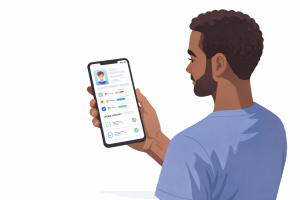
Ease of sharing matters more than many freelancers realize. Recruiters, staffing agencies, and clients often review candidates quickly and on mobile devices. If experience is difficult to access or requires multiple attachments, it may be skipped.
Mobile-friendly profiles remove unnecessary friction. This is especially important in healthcare and contract work, where hiring timelines are short, and decisions are made quickly.
Consistency also plays a role. One strong reference shows competence. A pattern of references over time shows reliability. When freelancers consistently document feedback, they create a clear narrative without having to explain it.
Technical ability opens doors, but professionalism keeps them open. Soft skills such as communication, reliability, and adaptability are difficult to demonstrate through portfolios alone. References provide one of the few authentic ways to document these qualities.
Freelancers who want to strengthen this aspect of their profile often:
These signals help decision-makers feel safer saying yes.
One of the biggest differences between confident freelancers and anxious ones is timing. Confident freelancers update their records regularly. Anxious freelancers wait until they urgently need work.
Treating experience as a living record removes pressure. Freelancers who maintain their profiles consistently don’t scramble for proof; they share what already exists.
As freelancing continues to evolve, documentation becomes a professional responsibility. Those who embrace this early will find it easier to showcase freelance experience as opportunities grow.

For many freelancers and contractors, the early focus is simple: get the next client, secure the next contract, keep income steady. But over time, the real challenge shifts. It’s no longer about finding work; it’s about sustaining trust. To consistently showcase freelance experience, freelancers need to think beyond individual projects and start treating their experience as a long-term professional asset.
Freelance careers are rarely static. People change niches, expand responsibilities, work with different agencies, or move between industries entirely. Experience doesn’t reset when a contract ends; it accumulates. The freelancers who thrive long-term are those who document that accumulation intentionally.
When experience is treated as temporary, it gets lost. When it’s treated as cumulative, it compounds.
Credibility is not built in one project. It’s built in patterns. One successful engagement shows potential. Repeated successful engagements show reliability. When freelancers consistently document their work and collect references, they create a trail of proof that grows stronger with time.
This is what allows freelancers to move from convincing to confirming. Instead of persuading clients that they are capable, they simply show a history that speaks for itself. That is the real power of learning how to showcase freelance experience properly.
At this stage, long-term habits matter more than short-term tactics:
These patterns make the experience feel stable, even when freelance work itself is flexible.
One of the biggest risks freelancers face is losing access to their own experience. Clients move on. Supervisors change jobs. Agencies shut down. If proof of work only exists in someone else’s inbox, it disappears over time.
According to the International Labour Organization, non-traditional employment continues to grow globally, making individual ownership of work history more important than ever. Freelancers cannot rely on employers to preserve their records; they must do it themselves.
Owning your experience means storing references, project summaries, and verification in places you control. When experience is portable, freelancers remain resilient even as circumstances change.
General reference and profile platforms support this ownership by keeping references tied to the individual, not the employer. Tools like Recommendas allow freelancers and contractors to retain access to their verified references across jobs and agencies. Again, the value isn’t promotion, it’s continuity.
Every hiring decision is made by someone who doesn’t know you. They don’t know your work ethic, your intentions, or your personality. All they have is what you present. That’s why clarity matters so much.
When freelancers showcase freelance experience clearly, they reduce the mental effort required to say yes. Confusion creates hesitation. Clarity creates confidence.
Experience becomes easier to trust when it shows:
These elements remove uncertainty without requiring explanation.
As freelance careers mature, soft skills often matter more than technical ones. Reliability, communication, and professionalism are what lead to repeat work and referrals. Yet these qualities rarely appear in portfolios or resumes.
References are where soft skills become visible. Over time, patterns in feedback define a freelancer’s reputation. When multiple referees describe someone as dependable, responsive, or trustworthy, that reputation becomes hard to ignore.
Healthcare freelancers see this clearly. Families and agencies don’t just want capable workers; they want dependable ones. A documented history of trust, built through references over time, speeds up hiring and reduces resistance.
There’s also a personal benefit to this approach. Freelancers who document their experience gain confidence. They stop scrambling when opportunities appear. They stop second-guessing their worth. Their history exists, clearly and objectively.
Instead of asking, “How do I explain myself?” they ask, “Who should I share this with?”
That shift changes how freelancers negotiate, apply for work, and grow their careers.
Freelancing is no longer a temporary phase for many people. It’s a long-term career choice. Careers deserve systems. They deserve records. They deserve care.
Freelancers who build systems to showcase freelance experience are not over-preparing; they are future-proofing. They are ensuring that their work today continues to create value tomorrow.
Across the whole blog, one truth remains consistent: freelancers and contractors don’t struggle because they lack experience; they struggle because their experience is fragmented, informal, or hard to verify. Learning how to showcase freelance experience effectively is not about self-promotion; it’s about documentation, clarity, and ownership.
When freelancers centralize their work history, collect structured references, and maintain their professional records over time, trust becomes easier to earn. Opportunities move faster. Confidence grows. Experience stops disappearing when contracts end.
Freelancing is independent work, but it deserves professional proof.
Turn your experience into credible proof and showcase freelance experience confidently with Recommendas, your professional home for verified references and work history.